DOST, CESB UNITE SCIENCE AND COMPASSION IN DELIVERING RELIEF ASSISTANCE TO EARTHQUAKE AND TYPHOON-AFFECTED COMMUNITIES IN SARANGANI

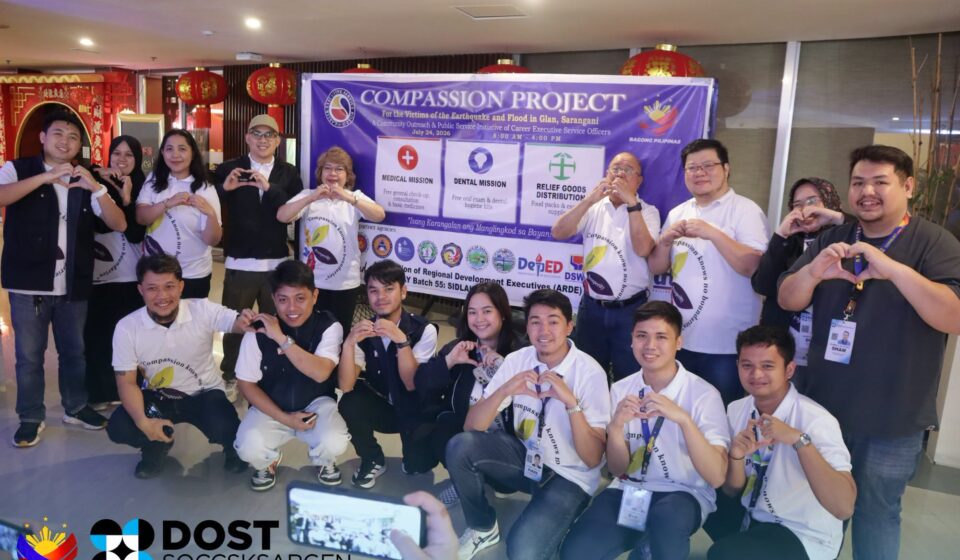
GLAN, Sarangani Province – Demonstrating that science, compassion, and collaboration are essential in disaster response, the Department of Science and Technology (DOST) XII and the Career Executive Service Board (CESB)formally merged their humanitarian initiatives — Agapay ng Agham and the Compassion Project— to deliver science-based relief assistance and essential services to communities affected by the recent destructive earthquake and succeeding typhoon-induced calamities in the SOCCSKSARGEN Region.
Originally intended for the families of Barangay Pangyan, Glan, the humanitarian assistance was symbolically turned over to the Provincial Government of Sarangani to ensure its timely and coordinated distribution to Barangay Pangyan and other families affected by the earthquake and weather-related disasters across the province.
Leading the turnover on behalf of DOST SOCCSKSARGEN was Regional Director Engr. Sammy P. Malawan, PhD, who emphasized that science extends beyond research laboratories and becomes most meaningful when it directly responds to the needs of communities.
“Sa DOST, naniniwala kami na ang agham at teknolohiya ay dapat makarating sa tao, lalo na sa panahon ng kalamidad. Through Agapay ng Agham, we continue to demonstrate that science can serve as a powerful instrument for huminitarian response and community recovery.” RD Malawan shared.
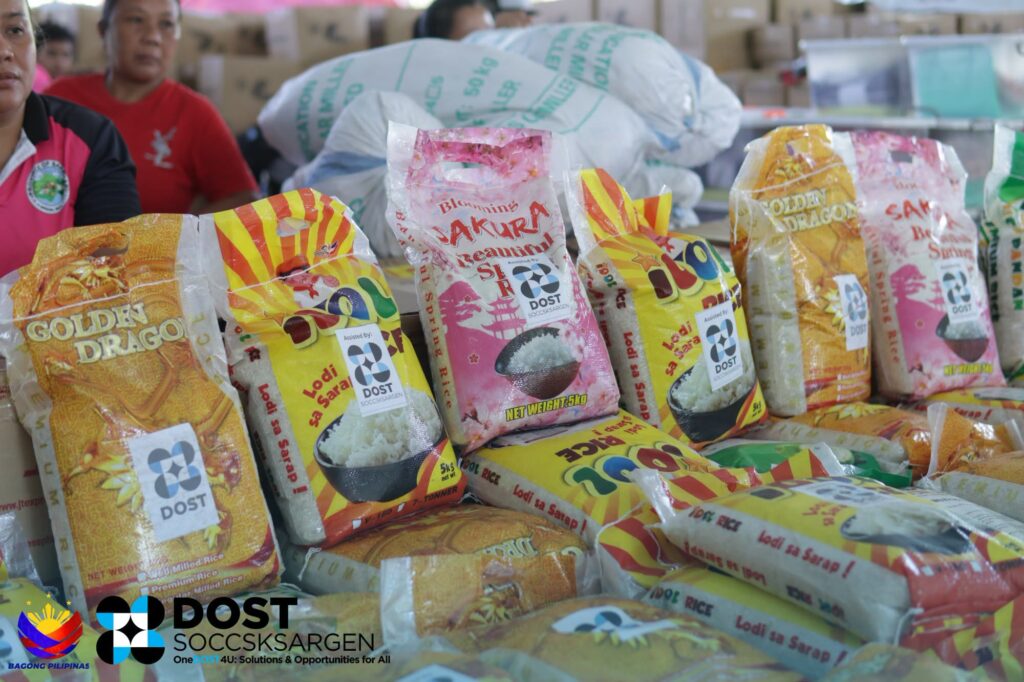
As part of DOST’s science-driven humanitarian response, the assistance included Iron- Fortified Rice developed by the DOST–Food and Nutrition Research Institute (DOST-FNRI), Ready-to-Eat (RTE) food packs, and Ceramic Water Filters developed by the DOST–Industrial Technology Development Institute (DOST-ITDI). These science-based technologies were provided to help ensure access to nutritious food and safe drinking water — two of the most critical needs during emergencies — while complementing the
government’s ongoing disaster relief and recovery efforts.
The activity brought together national and regional government leaders, headed by Career Executive Service Board (CESB) Chairperson Dr. Urdujah G. Alvarado, CESO II; SOCCSKSARGEN Association of Regional Directors and Executives (ARDE) President and Department of Budget and Management (DBM) XII Regional Director Akmad J. Usman, CESO III; and Sarangani Governor Rogelio D. Pacquiao. They were joined by officials from various national government agencies, such as DepDev, DILG, DepEd, and OCD, local government units, and development partners in a unified show of support for the affected communities.
In her message, Dr. Alvarado emphasized that the Compassion Project reflects the very essence of the Career Executive Service — leaders working beyond institutional boundaries and coming together to put people first. She noted that true public service is measured not by position, but by the willingness to respond with compassion, collaboration, and purpose, especially in times of crisis.
The convergence of Agapay ng Agham and the Compassion Project reflects a shared commitment among government institutions to strengthen disaster response through collaboration. While CESB mobilized government leaders, partner agencies and further humanitarian assistance under the Compassion Project, DOST contributed science and technology-based interventions that support the health, nutrition, and resilience of affected communities.
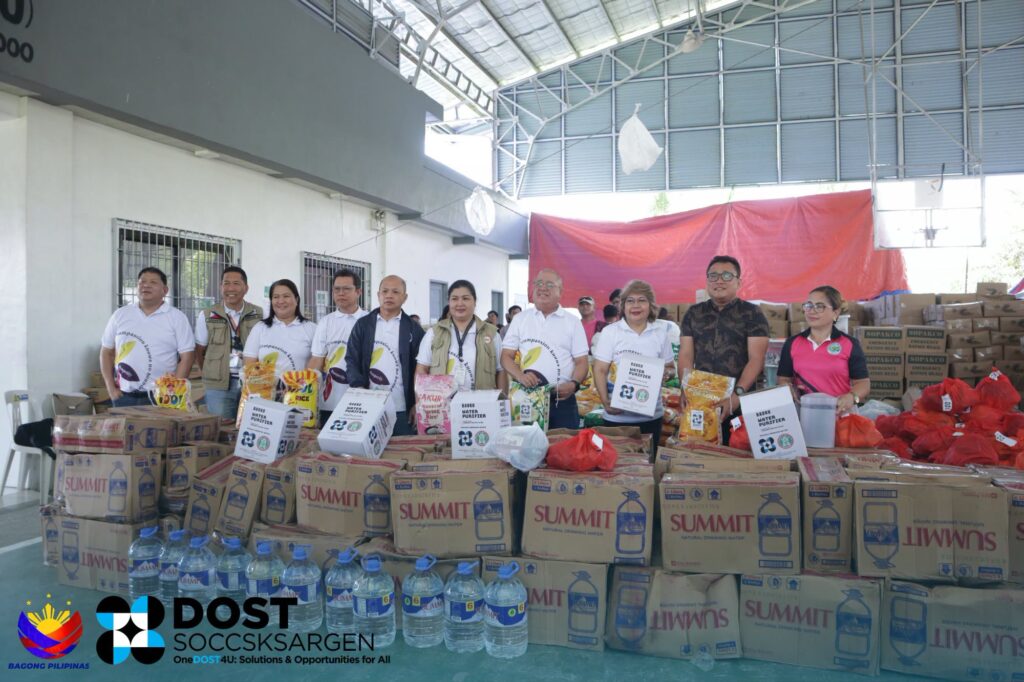
Governor Pacquiao expressed his appreciation to the participating agencies for their collective efforts, emphasizing that partnerships such as these enable local governments to immediately reach families in need, especially in geographically challenged and disaster-stricken areas.
Through Agapay ng Agham, DOST SOCCSKSARGEN continues to demonstrate that science is not only an engine for innovation and development but also a practical tool for humanitarian assistance. By working alongside CESB, the Provincial Government of Sarangani, and other partner agencies, DOST reaffirms its commitment to bringing science closer to the people — especially those who need it most during times of crisis.