FROM THREAD TO FUTURE: HOW DOST’S RYPIC KEEPS AN ILOCANO WEAVER’S DREAM ALIVE

In every swift movement of a local weaver’s hands lies a quiet labor of love, enriching a cherished tradition, art, and culture of weaving that often goes unnoticed in the rush of the modern world. Yet beneath every neatly lined thread rests a real story of hard work, persistence, and quiet success waiting to be told.
The Ilocos Region is home to over 1,000 weavers—individuals, family businesses, and community groups who have dedicated their lives to keeping the traditions of their ancestors alive. For years, however, weaving communities across the region faced a major problem: expensive costs and an unreliable supply of good quality thread.
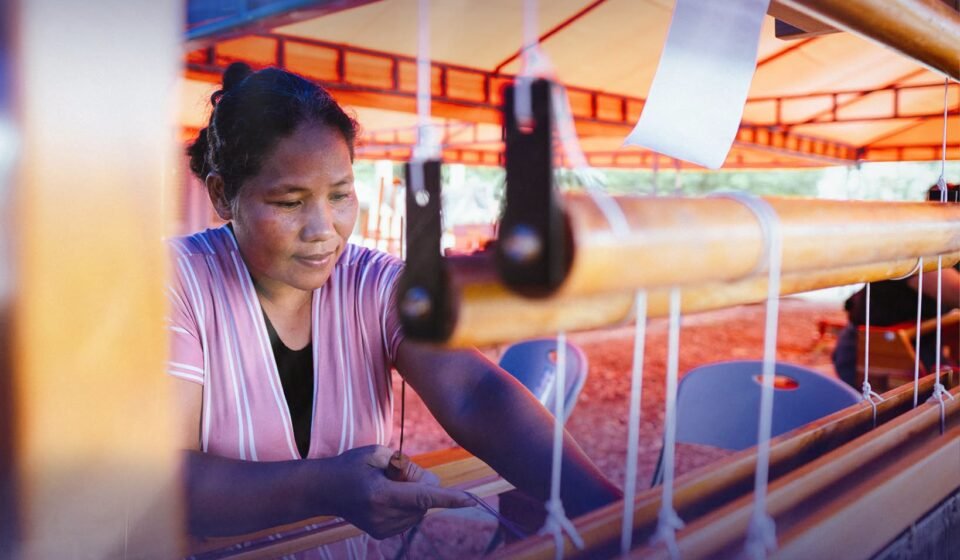
To many, panag-abel—the traditional Ilocano way of handloom weaving—might look like an old art best seen in museum displays, cultural trade fairs, or special celebrations. But for Carolyn Sabado, a weaver from the Dream Weavers of Lower Surong in Vintar, Ilocos Norte, the threads she handles are far more than just items on display. They are the base of her everyday life and hope for her community’s future.
Even as a young girl, Carolyn had a genuine love for crafting. Her mind was naturally filled with bright colors, detailed inabel patterns, and creative textile designs. But creative ideas alone, without raw materials and proper support, often stay as just dreams.
This is where the Department of Science and Technology (DOST), together with the DOST-Philippine Textile Research Institute (DOST-PTRI) and DOST Ilocos Region, came in to help. By giving specialized technical training and modern weaving equipment like Thera Looms, DOST helped Carolyn and her fellow manghahabi (weavers) turn their craft into a steady and growing business.
To solve the lack of thread and high production costs for the long term, DOST built the region’s first Regional Yarn Production and Innovation Center (RYPIC) right in Vintar, Ilocos Norte. This facility directly solves the thread shortage by processing local, natural plant fibers—such as abaca, bamboo, banana, pineapple, and cotton—into high-quality thread.
For Carolyn, this support did more than just boost her family’s daily earnings. Handweaving also served as a peaceful activity that helped her physical health,
supported her family, and helped protect the inabel tradition.
“Habang napagpapatuloy ang pag-aabel, naroon dapat ‘yung determinasyon na dapat ay malayo ang marating ng inabel mo, hindi lang sa loob ng komunidad… at umaasa kami na marami pa kaming mabebenta,” (As long as we keep panag-abel alive, we must hold onto the determination to bring our inabel far beyond our community… and we hope to sell much more,) Carolyn shared.
With RYPIC Vintar now open, local weavers no longer need to worry about running out of materials or buying expensive imported threads. Instead, the thread moving through their looms comes straight from the farms of local Filipino farmers.
On August 7, 2026, President Ferdinand R. Marcos Jr. saw firsthand how science, technology, and new ideas at RYPIC Vintar are bringing new life to the local textile industry. Led by DOST Secretary Renato U. Solidum Jr., alongside Regional Director Teresita A. Tabaog and DOST Ilocos Region officers, the team introduced Carolyn and her fellow weavers to the President. During their short talk, the weavers shared how DOST’s support changed their lives and shaped the future of weaving in the region.
Keeping our culture alive in modern times requires everyone’s support. With every thread guided by the hands of local weavers, DOST shows that when science and communities work together, the fine threads of our past stay strong, bright, and meaningful for generations to come. (DOST Ilocos Region)