
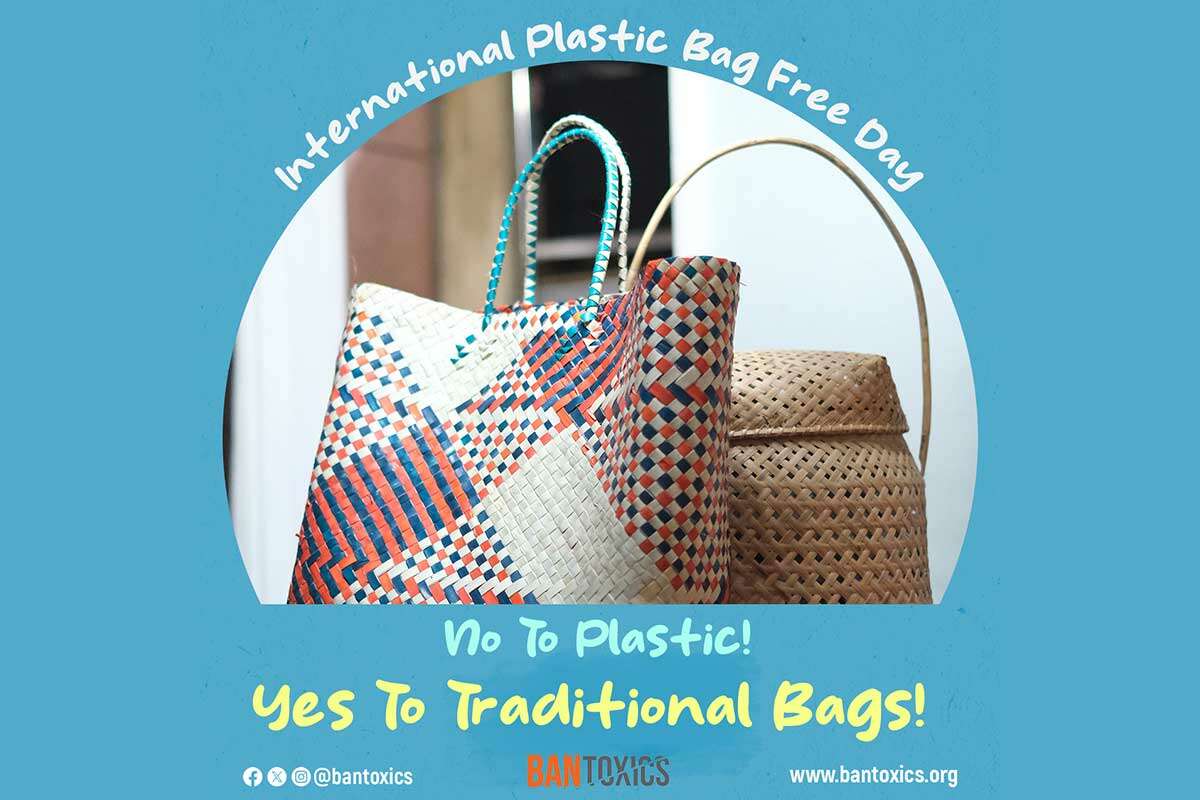

In celebration of International Plastic Bag Free Day, environmental NGO BAN Toxics calls on the public to minimize the use of so-called reusable eco-bags made from plastic materials such as polypropylene, polyester, and nylon. The group also emphasizes the need to further promote a culture of reuse.
International Plastic Bag Free Day began as a grassroots initiative to address the growing problem of plastic pollution. First launched by Zero Waste Europe and other environmental organizations, it designates July 3rd of each year to raise awareness about the environmental impact of single-use plastic bags, encouraging the adoption of reusable bags.
“While reusable bags have become commonplace in grocery and shopping markets to reduce single-use plastics, another emerging issue is how frequently these bags are actually being reused. If many of these reusable bags are made from synthetic polymers and treated as single-use, are we really addressing the plastic pollution problem?” BAN Toxics Policy Research and Development Officer Jam Lorenzo said.
A study published by the United Nations Environment Programme (UNEP) recommends that for reusable bags to have a lower impact than single-use plastic bags, they should be used a sufficient number of times:
Cotton Bags: 50-150 times
Paper Bags: 4-8 times
Reusable Low-Density Polyethylene Bags: 5-10 times
Durable, Non-Woven Polypropylene Bags: 10-20 times
BAN Toxics notes that currently, there is limited data on the extent to which plastic-based reusable bags are reused versus wasted. Nonetheless, the group encourages the public to consider choosing traditional and biodegradable alternatives such as ‘bayongs’ made from dried ‘buri’ or pandan leaves, bags made out of water lily, abaca, and rattan, or canvas bags.
“A critical change in behavior among consumers, retailers, and producers is needed to further instill the reuse culture. Reusable bags may be considered a stop-gap measure to address plastic pollution, but if we don’t actually reuse these items, we’re just replacing single-use plastics with another type of waste,” Lorenzo said.
Plastic pollution has surged alongside the growth of plastic production, with single-use plastics now comprising 50% of total production. Studies indicate that global production has risen sharply from 1.7 million metric tonnes in 1950 to approximately 400 million metric tonnes (by polymer) in 2022, and projections suggest it could double once more in the next two decades.
According to the Department of Environment and Natural Resources – Environmental Management Bureau (DENR-EMB), the Philippines generates 61,000 metric tons of solid waste daily, of which 12 to 24 percent, or about 7,320 to 14,640 metric tons, is plastic waste.
Meanwhile, a recent statement by the National Economic and Development Authority (NEDA) projects that the country’s daily waste could increase to 194,138 metric tons by 2055. This projection is based on the average waste generation of higher-income and developed countries, using the latest population projections by the Philippine Statistics Authority.
Plastic waste management in the country is governed by the Ecological Solid Waste Management Act of 2000 (Republic Act No. 9003), which is supplemented by the Philippine Development Plan (PDP) 2023–2028 and the Extended Producer Responsibility Act of 2022 (Republic Act No. 11898). To date, at least 489 out of the country’s 1,634 local government units have passed a local ordinance banning single-use plastics.
BAN Toxics notes that despite these mechanisms, greater steps are needed in terms of effective implementation and stakeholder engagement. The group also believes that new laws promoting the reduction of plastic production and consumption, as well as the adoption of more sustainable alternatives, are still necessary.
“Plastic pollution remains one of the biggest threats to human health and the environment, and we can only address this by reducing the production and consumption of plastics, especially single-use ones,” the group concluded.
Last April, Lorenzo participated in the fourth session of the Intergovernmental Negotiating Committee (INC-4) to develop an international legally binding instrument on plastic pollution, including in the marine environment. BAN Toxics is advocating for a plastics treaty that adopts a full-life cycle approach to addressing plastic pollution and prioritizes substantial reductions in global plastic production. The fifth INC session is scheduled for November 25 to December 1, 2024, in Busan, Republic of Korea.
References: